Bears and Wildlife in Jasper
Bears with Cubs Occupy Areas in Spring 2009
Some black bears have cubs near higher traffic hiking areas.
Female Bears with cubs often lose weight right into early summer, while males begin gaining weight again probably near the end of May in Jasper. This should help you realize that Bears' food sources, especially early in the year, are extremely important to their survival.
If you do encounter Bears with cubs, please give them lots of room and move on quickly to keep stress low. Bears' feeding while stressed will obviously be interrupted.

(2008 hiking season) Male Bighorn Sheep are a little more aggressive between late October and January. A few favorite Jasper hikes may bring you near them which requires caution on high slopes. While hiking some common hikes in Jasper, we have been awaken for the first time last year by Bighorn Sheep. Our hike brought us to a point in a trail on top of some lower peaks among 6 large Male Sheep that had no intention of being shy about their claim to this area.
If you have no retreat, do not stop and stare or observe large males from close quarters between the end of October to December (their competitive mating season) for very long. It did not take long for the largest male to quickly approach us in our ignorant stare.
If you keep moving, they will not focus on you, but stopping and staring is exactly what they do to eachother before they carry out their well-known head to head face off and batter. The incredible force that a 300lb Bighorn sheep can produce is good reason to stay away from the combination of peak edges and these big fellas during their most aggressive times.

(late summer - fall 2008 hiking season)
While Bear encounters are much less frequent now, some hikers and wildlife watchers are still experiencing encounters. Bears that were seeking berries near most hiking trails have now dispersed in seek of additional food sources. As the berry season was considered less of a good resource this year it probably remains a sensitive time to be bear aware. Jasper has seen at least a couple unusual Bear situations recently, most likely as a result of the lack of berries.
Warning on Hiking Trail - Opal Hills has had Grizzly bear encounter warnings along that trail for the last few years, and a number of Grizzly Bear encounters there this year has been cause for this to remain.
Important Bear Info for Late Aug/Sept 2008:
- Suprise encounters with Bears are considered the most dangerous situations.
- Many Bear cubs may be concealed and DO EXIST in many common areas. Suprising a mother Bear with cubs will require extremely sensitive actions.
- Bears often protect food sources more aggressively than even their own cubs
- Any Bear that is suprised in close quarters will probably fear it is being stalked or possibly even preyed upon, which obviously justifies aggressive responses on their part.
- Bears are more intelligent than you might think. A close encounter with children in your group would require focus on the children's safety. Pick them up or put them on your shoulders.
There are also many mother Black Bears in common areas with Cubs of the Year by their side. Please leave a little extra room when you are in a Bear family's territory.
Black Bear mothers, even with cubs, are quite forgiving of our nature; however, if you are in their presence taking photos or hiking, be sure to observe mum's behavior for signs of stress.
If a mother Bear starts turning to look at her cubs or you quite often, she is probably no longer being natural.
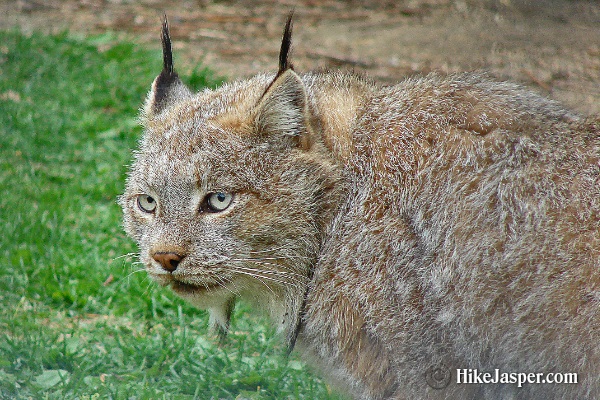
click to enlarge Lynx photo - 2007
A hike out in Jasper may bring you near predators of all sizes.
Lynx sightings while hiking in Jasper are quite rare, but do happen to the unusually lucky!
A hike in Jasper may mean being fully prepared to seize the moment as well - bring your camera along and have it ready.
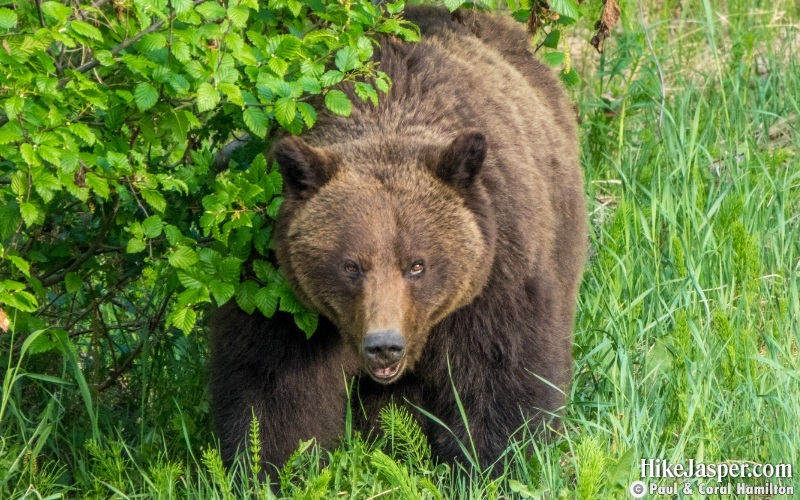
The largest Male Black Bear I have seen in Jasper - 2007.
When viewing wildlife, it is generally an easy-going and enjoyable affair, at least for us. When hiking in Jasper, it is the suprise encounter that both us and the Bears find unusually stressful. They probably feel as though we were sneaking up on them, which can, however rarely, provoke a response.
In observing some bears over the course of more time, one can see that lost cubs, lost territories, lack of expected food sources, etc.; places an enormous amount of stress on wild bears.
An adolescent Black Bear struggling in the heat, fell over when it lost its' footing...a tiny moment that displayed its' exhaustion.
A week later, the much larger bear above was in this same spot, which may offer why the urgency to cover ground existed for this young smaller bear.

2007 Jasper Alberta Bear Encounter Info:
Spring 2007: Black bears and at least 1 Grizzly bear is frequenting hiking trail #7 near Jasper Park Lodge Golf Course. These bears are feeding on the green vegetation near the hiking trail. Because this Jasper hiking trail contains lots of cover, please be cautious or avoid the area to prevent suprise bear encounters.
Bear mating season is very close, which means seeing 1 Bear may not necessarily mean that is all the Bears in your presence.

Bear Encounter info and Previous Jasper Season:
There are quite a number of people that have experienced Bluff charges and surprise encounters by both Black and Grizzly bears on trails out near Maligne Lake, Overlander, Pyramid Overlook, Valley of Five Lakes to name a few. When viewng the hiking trail information pages, you will often see "Bears frequent these trails", when in fact, it should be assumed that at least Black Bears can be found on any trail with only a couple of exceptions. We were even surprised by the largest Black Bear we have seen at the bottom of the stairs at Old Fort Point, so be aware, everywhere. It does NOT help you to be quiet! A bear that knows you are coming will likely move on at least until you pass.
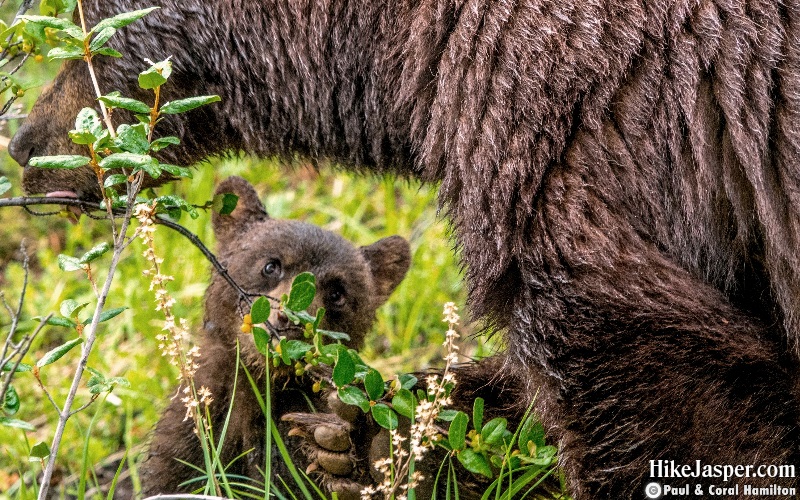
Patient Black Bear mother nurses her 2 Cubs.
There are a number of Bears with cubs that have territories very close to human use areas this year, so please be cautious and respectful of their needs.
A different Black Bear mother nurses 3 cubs.
The first mother Black Bear we came across in the third week of May 2006, had three cubs who did a great job of concealing themselves. It is very difficult to identify what Bears may be accompanied by offspring of the year.
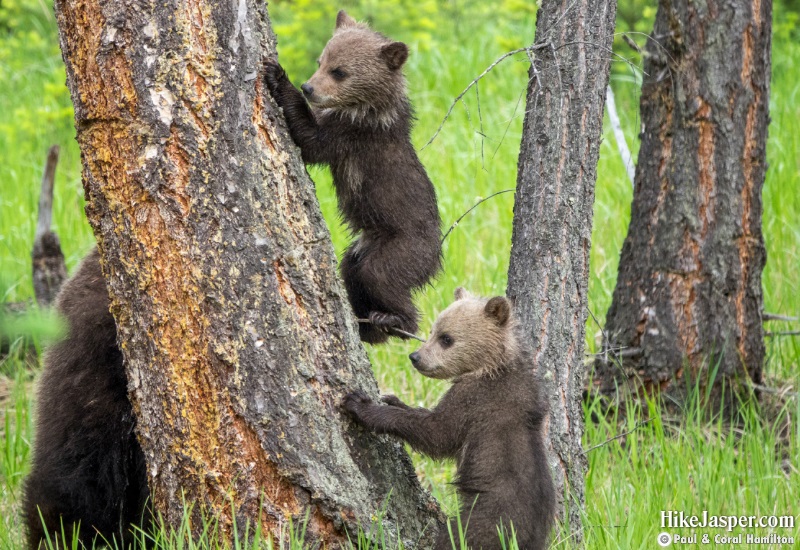
 Bear cubs entertaining themselves and us at play.
Since, I have seen five different Black Bear mothers - 2 with 3 Cubs and 3 Black Bears with 2 Cubs. All five of these mother Bears displayed somewhat different personalities, which reinforces that we need to be very cautious and to never generalize.
Be prepared to be a little more "wildlife" observant while hiking in Jasper...paying special attention to Bear and other predators' signs. Don't forget that it is normal to see a bear in Jasper, which is actually one of the reasons people love to come to Jasper National Park!
Wolves Feeding on a Kill.
Kills - We have come across a number of kills along some favorite trails in the spring. If you stumble across one yourself, leave the area immediately. You can assume that any Bear within kilometers of a kill will find the easy meal within hours. Bears will defend a kill more ferociously than even their own cubs - if you unkowingly approach a kill, a present Bear may assume you are there to steal it which usually results in the worst kind of conflicts. Wolves and other predators usually flee areas when humans enter, even while at a Kill-site; however, we will invite problems if we push them to get used to us being around their sacred areas.
I am reluctant to say this, as Mountain Lion sightings are so rare, however, cougars often lie near their kills as well; killing smaller predators that approach. Another reason to avoid a kill-site.
In late May to early June, Elk cows disappear off on their own to give birth, avoiding predators' ability to discover them easily through numbers. There are some sacred areas in Jasper that Elk prefer to give birth, which are blocked off to hikers and bikers. Mother Elk will leave their calves for long periods of time in these areas as they, themselves are easier to detect than their calves and they know the new arrivals have a better chance of avoiding predator conflict when they are not around. Predators will be in these areas for obvious reasons as well, which is ample reason to respect the entire natural processes that take place at these times. Please steer clear and respect posted signs.
The Autumn rut(Sept-Oct) is time to be aware of Elk Bulls and their Cows. While cows are aggressive in May and June, Bulls are very aggressive at this time. Do not move between a Bull and his cows. Signs that a Bull may be angry or showing aggression include, raising their head(tilting chip up), staring at you, curling their lips, and grinding their teeth. Your defence, if charged, should be to get something between you and the Bull, climb a tree, raise your jacket or an object up high, or go into water. They are smarter and quicker than you may believe, and a very large Rack will not prevent them from charging through dense bush.
Other Jasper Predators..
The key to ANY interaction between you and a curious Wolf or Mountain Lion is intimidation. Do your best to seem imposing, and if tested or attacked fight back.Stay Alert.Always watch for animal movement.Stay on Jasper's hiking trails.Dawn and dusk are the hours to be most careful.Hike in groups rather than alone.Always make noise; while carnivores are opportunists, they do fear humans.

Bears in Jasper
Most Bears are said to be groggy when they come out of initial hibernation, but they can be fully aroused under certain circumstances, so stay aware. It may make sense to think that hikers or bikers could surprise Bears more easily in the spring as they are a little less aware of their surroundings.
We have personally had several sightings of both Black and Grizzly bears in the end of August and beginning of September. Two of our Grizzly encounters were just a few kilometers from the Valley of the Five Lakes Trail, so do not underestimate their close proximity to favorite trails.
An angry Grizzly Bear is something you are probably never going to see, but be prepared and respectful as you never want to feel that you could have avoided an encounter that has gone bad. If you are unaware in Bear country, or your hiking becomes too ritualistic; you need to change something. A poorly planned, poorly timed or unlucky judgement call around bears may not always offer another chance.
I have seen an actual Bear attack where Bear Spray worked as a defense, but the Bear(running) was extremely quiet. From the time of hearing the rush to actual contact was about 2-3 seconds...CAN YOU ACCESS AND READY YOUR SPRAY THAT QUICKLY? *Also, contact WAS made, and the person was knocked down and on their back when they were using their spray. The Bear moved only about 20 feet away with their face burried in their paws after being sprayed. Make sure you have very easy access to your bear spray! - This was not in Jasper.
Make sure you keep your distance as we have witnessed Grizzlies running, and they are capable of closing a large distance quicker than you can decide what you are going to do. If you are in your car, do not exit to walk across the road to get a better view...they can probably beat you back to your car from even another hundred meters away.
If you are hiking, start dealing with your bear encounter at first sight. Ask yourself "what could happen...worst case scenerio", and do your best to start making your situation immediately better instead of disadvantaged.
And remember...Bears are not the only animals that possess the ability to harm a human.

This was 1 of a pair of adolescent Grizzly Bears, twice the size of any adult Black Bear we have seen; possessing the agility and curiousity of cubs.
Jasper Bear Encounters / Incidents(2006)
- Opal Hills - Many hikers have encountered a Grizzly bear ranging this area.
- Overlander Trail Near 6th Bridge - Family was bluffed by a Grizzly bear and had to re-route back to the hiking trailhead. I happened to be hiking in the area this day and heard this from another hiker.
- A couple and their young dog experienced a Black Bear conflict with physical contact on the Jacques Lake Trail, between the two summit lakes. (near Medicine Lake Trailhead)
*Keep in mind, most Bear encounters will not be posted, with the exception of some high-use areas.
This Year's Unique Bear Factors
Last years' past abundant berry crop suggested that there might possibly be more cubs in 2006, which would also mean more mother bears under a little extra stress. It certainly seemed to be the case from my perspective. Leave the bears and YOU lots of room while hiking!
Claws on a Black Bear seem cat-like, but a Black Bear weighing the same as a big cat such as a lion, could probably climb circles around them among the trees. A Bear's exceptionally powerful chest and back can produce a "Bear Hug" that makes ease of tree climbing.
 Coming across a Bear resting at the bottom of a tree can be common while hiking in Jasper. This happens to be a mother Bear that was sleeping at the base while her cubs slept safely up the tree.
In most cases, simply hiking on from here would be uneventful unless the mother Bear was unusually stressed before your hike brought you near her.
Being Bear Smart:
How to avoid a BEAR ENCOUNTER...
- Make noise Watch for fresh bear signs. Be cautious of areas with bushes that have many ripe berries as the bears are probably not far off. Travel in groups. Never approach a bear (stay back a minimum 100 metres - preferably 300 meters when hiking). Carry bear spray and know how it works.
How to handle a BEAR ENCOUNTER...
- Stay calm
- Get your bear spray ready
- Speak to the bear - let the bear hear your voice
- Back away slowly, NEVER run
Ridiculous among WILD BEARS...
- You wouldn't think we would have to say this about Bears in Jasper, but they are indeed Wild animals that live a chaotic life compared to ours. When photographing bears, use common sense. Don't follow a Bear into the forest to get that "perfect pic"!
I am sure we have all seen or been people who have done rediculous things around wild bears over the years. Chasing, approaching, or following a bear is an act that would be considered predatory to them. How would YOU feel if someone was following or watching you persistently. How would you react? Bears are certainly more forgiving than we are, but testing boundaries with any wild animal is not a good idea. Please don't invite Potential disasters with wildlife in Jasper.
TIPS for CYCLISTS
- Your speed and quietness put you at higher risk of a surprise bear Encounter. Slow down through shrubby areas, downhill areas, and blind corners. Travel in groups, make noise, and watch ahead.
Human's fear of being killed by a Grizzly is in fact a possible reality, but is very unlikely. In North America, more people are killed by dogs each year than all types of bears put together. I have heard a saying, "It is a poor life that achieves freedom from fear," and believe that is certainly true. We are all afraid when we come across a Big Bear on a lonely stretch of trail, knowing for at least these next few seconds we are at mother nature's mercy. A clear understanding of our role in those few seconds is what gives humanity its' position among all species.
Despite a Grizzly Bear's menacing appearance, and what we see in most movies, those claws and that powerful musculature have evolved for digging, not killing. Most Grizzly Bear's first line of defence is to Bluff their enemy. A startled Grizzly will clack its' teeth, turn side-ways to display its' size, or make sudden short rushes in hopes you will move on. It is only when it feels the stakes are too high, that it will contact you, out of fear. Having cubs or food to protect, or being cornered would count as high stake encounters. Limiting what happens there may require quick thinking and possibly Bear Spray(it is just silly to go without).
That being said, our reactions can introduce issues. Never run from a Bear, and do not shout, scream, jump or jerk, etc. If you were in front of a startled stray dog, you wouldn't do this, you would know to be calm. The same rings true with Bear encounters. You need them to know everything is OK, and you are confident that everyone will be just fine. If nothing else, this would certainly help confuse a predator into thinking you know they can't harm you. Easier said than done, I know.
My very first bear encounter while hiking (Valley of Five Lakes), found me and my partner jogging the opposite way after the bear took a few steps off of the trail (and Yes, that typical do as I say, not as I did rings true here). Looking back at it, I did stand my ground (in shock, however), and the bear simply stepped off the trail calmly, before my partner was even able to see it (I was in front). How many bears we actually pass in this manner we will never know, but it does represent most encounters that we have, or have heard about since.
If you are paying attention and making noise, you will probably never experience a high stake encounter.
|

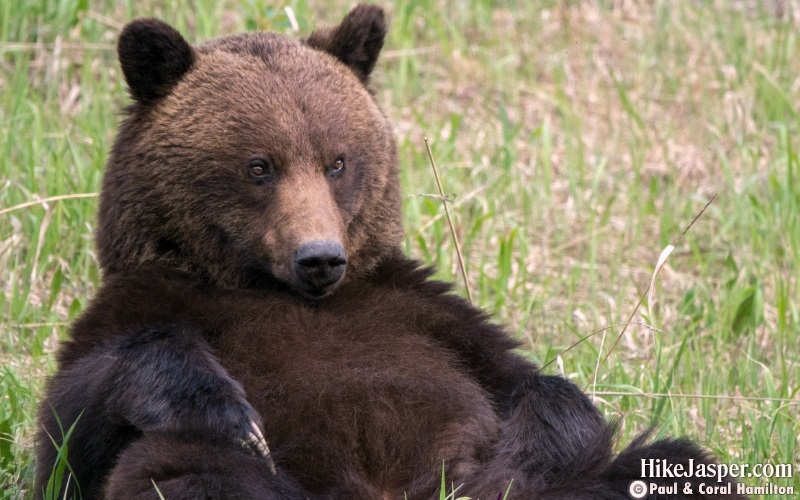
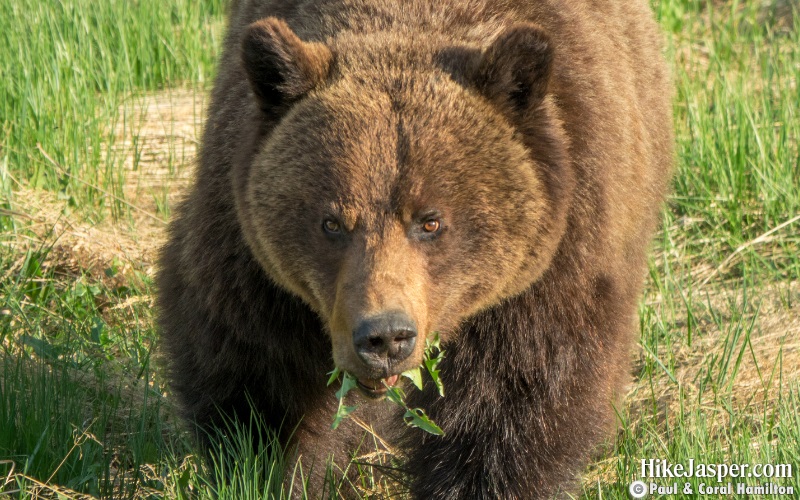
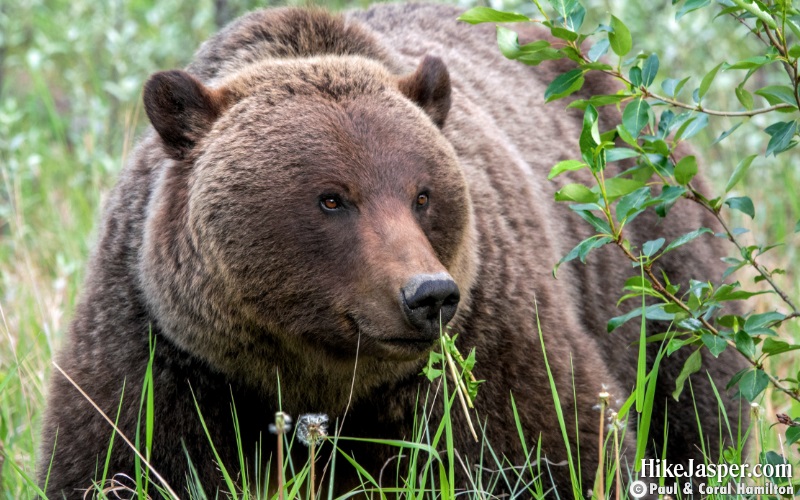
In all honesty, you are far more likely to encounter wonderful Bear situations as in the images below, but our own human ignorance is what places us in a situation that may be both bad for us and the Bear. Please, remember that all they want to do is survive.


*Remember.. Being experienced with bear encounters can increase your risk of injury if you become somewhat relaxed and think they are predictable. Always remain on guard, regardless of your Bear experience! Try to think of bears like people; they all have different personalities, moods, and unpredictable reactions...as well as good days and bad days. Crossing paths with a healthy happy Bear that may just be moving from A to B will obviously not act the same as that same Bear after experiencing a challenging encounter you may not have witnessed.
- In addition, I would be a little more weary around adolescent bears that can be both large and still experimenting or learning. They may still be testing nature like cubs and also possess the power of adult bears. These bears would probably be far less predictable than adults who may have had more successful rituals with regards to food sources.
New Theories on Grizzly Bears can not be ignored..
It may be a little unorthadox to mention this, but with so much attention brought to Grizzly Bears as a result of the documentary "Grizzly Man", I thought I would add a comment...
While all Bear biologists(and bear lovers) would probably agree that it is a bad idea to habituate any type of relationship between Grizzly bears and people, there was a lot to learn from Timothy Treadwell.
No one has ever aquired as much interactive knowledge of Grizzly bears as Timothy Treadwell, and his 13 years of successful living amongst the great Brown Bear should offer a lot of insight as to "close encounter" reactions and survival techniques.
There are a lot of variables that we do understand that may have resulted in this tragic outcome, however, there are far more variables that can be taught from the Grizzly Man's experience on how to survive during close encounters with Grizzly bears.
Timothy Treadwell certainly pioneered many successful theories on how to survive during close bear encounters.

Learning from Bear Encounters and Attacks
In observing incidents involving both extreme Bear agitaion and Bear attacks, there are a few basic Bear reactions or actions that can help you identify the situation. Contrary to what we may think, Bears that may put on an extremely aggressive demonstration and Bears that may appear docile could be considered contradictory to what our human instincts cause us to believe. Information on Bear encounters retrieved from a database of conflicts drew some of these common characteristics.
Defensive or Startled Bears
Close encounters with what could be called defensively acting Bears included behaviors like:
Salivating, Vocalizing, Smacking Upper and Lower Teeth together, standing upon hind legs, rushing toward or away from the person(s), hitting the ground with forepaws, and turning ears down and back.
The hiker or person's general behavior before incident may have been:
Startling the Bear, being downwind of the Bear, in dense vegetation that obstructed view, there may have been a higher amount of noise, or maintaining presence too long.
|
*Predatory Bears
Predation of Bears on people was identified by Bear behaviors such as:
In search, approaching slowly to test, grabbing and dragging a person to another location, and trying to bury a person (injured human).
It should be noted that it appears predation often involves a silent Bear, or at least a lack of vocalizing or stress behaviors. If you have been close to a silent Bear, seeming to approach casually, I know you would say you would feel more "at ease" than observing a "big show"; which is an important reason for observing this information.
*The classification of Bear predation included killing or trying to feed.
|
Being Charged by a Grizzly Bear
A few people that have shared info on being charged by Grizzly Bear's from Yellowstone, to Alaska have witnessed some commmon characteristics. First, I should mention that Grizzly Bears do have a larger "safe distance" range that you should respect in order for this not to happen. Grizzly Bear charges involving both bluffs and contact seem to be more frequent than Black Bear charges by those I have talked to.
Below describes some common observations from people who have experienced both grizzly bluff charges as well as charges involving contact.
Grizzly Bear Bluff Charges
Many grizzly bear bluff charges involved some unique characteristics:
Head and ears up, lots of huffing and a gallop that involves the pounding of its' front paws on each footstrike.
|
Grizzly Bear Charges Involving Contact
Some common characteristics people mentioned about grizzly bear charges that involved contact were:
Head and ears down, eye contact throughout charge, full-on run towards person, no hesitation.
|
|
 | |
|
|
|
Need assitance in finding a Jasper hiking guide or additional trail information? Email HikeJasper.com at:

 Please respect a Bear's space in Jasper. Bears lives are tough enough without having to worry about running into people often.
If you have a Bear sighting while hiking or biking in Jasper, give them the right of way and the space they need to feel safe.
>>> On a personal and professional note, what I do is facilitate attention to matters of all kinds. I believe a very important issue we have in Jasper National Park is with our signature Grizzly Bears. Jasper's "living" Park may very well be threatened if Brown Bear numbers continue to decline.
This great Bear is a monumental symbol of "life" that requires a great deal of attention today. Below are some important Grizzly Bear PDF reports worth reading:
Grizzly Recovery Plan Feb 2005
Management of the Grizzly Bear in Alberta
Human - Bear Fatal Conflicts
Human Fatalities from Bear Attacks in North America.


View some fun Bear Cub Video Clips Here
Bear Encounter Tips: Mother Bears with Cubs
An encounter with a Black Bear mother and Cubs is more likely in Jasper. In most cases you will find that Black Bear mothers are fairly calm as cubs instincts to hit the tree tops relieve the mother Bear of stress. If however, you are in an open area with no trees for the Bear cubs to climb, you can expect the mother Bear to become more excited. A mother Black Bear will feel a lot more vulnerable if her cubs have to remain on the ground, and she may focus her attention on you - the threat.
If a Black Bear mother is concerned you may hear her vocalize to her cubs(it sounds similar to a Gorilla grunt or bark), telling them to get in the trees. In most cases I have seen, the mother Bear's agitation is present, and grows until the cubs are in a tree. Then she usually carried on foraging.
Grizzly Bears with Cubs

An encounter with a Grizzly bear mother and cubs is less likely as Brown Bears usually seek out solitute. A mother Brown Bear's shyness would be obvious in most circumstances, however, Grizzlies are more protective of their cubs. A mother Grizzly Bear, even hundreds of meters away, may charge at the sight of a threat to her cubs. Like Black Bears, Grizzlies will take every opportunity to avoid an encounter with us, but I know of instances where a Grizzly mother will cover a tremendous amount of ground to remove any threats.
Bear Territories
Most Bears have a "home range" that they develop detailed knowledge of. While a Male Grizzly Bear needs to roam a very large range to survive, a Black Bear mother(below) may have a fairly small range if it can sustain her. Below is a mother Black Bear that seems to have found a common tree...she smelled, and then rubbed her face and back on for several moments.

 A sincere "Tree Hugger"!
 A cub of the Year follows mums lead.
Interesting Bear Facts:
Bears have evolved unique bone characteristics that offer an ability to become somewhat elastic instead of brittle as they age. These "flexible" bones not only compliment a Bears' hibernation (lack of nutrients), but may also mean an older Bear has physical advantages in its' genetics that other animals do not.
Bears sensitive noses are claimed to have an ability up to 75 times more effective than humans, which also helps justify their lack of interest in us. If Bears were indeed interested in humans as prey it would reveal itself very consistently.

While hiking in Jasper, the Bears you come across are often the ones oriented upwind or near a food source. Bears, when able to smell us(downwind), often seem to move away from humans. On the flip-side, if a Bear is fairly close to you upwind, there is a good chance that you will smell them. Their odour certainly can assist us with our poor sense of smell!

Bear Smarts
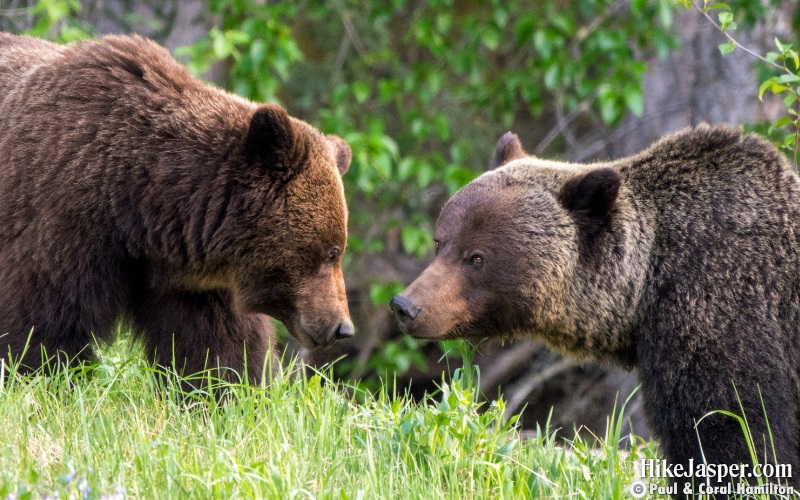
My general education or early "informed" ignorance thought Bears were not very intelligent.
Jasper locals who have practical observation in the wild, however, will tell you Bears are indeed smart.
Bears are very intelligent - they memorize their territory very well, can problem solve in their environment and certainly size us up! Black Bears that we run into in the wild seem to have an instinctual ability to know whether we present a physical challenge. Obviously, another reason to be in numbers. If you wonder whether a Bear can tell if you are healthy and/or strong, this may be so. While Black Bears certainly recognize and often respond to physical size in humans (more apt to run from a larger person), they do display more interest in smaller people.
If you are hiking with children and run into a Bear, pick them up and/or put them on your shoulders. Your Kids, not the Bear that is!
Also, you are best not to crouch or squat near a Bear. This is something many of us do (I have), when taking photos of Bears. Obviously at a distance you are fine, but Bears are smart enough to disguise their approach as casual grass munching that may have a zig-zag approach towards you while you are caught up in the moment, looking through your camera's viewer.
|